Reworking a 1920s South Minneapolis Bathroom Without Bumping Out a Wall
When a growing family in South Minneapolis asked us to rethink their second-floor bathroom, the real problem wasn’t space — it was how the space worked. The room had a decent footprint, but the layout and flow felt cumbersome even for two people, and the family was planning to grow. Here’s how we turned a roomy-but-awkward bathroom in a 1920s home into one built to serve them for years to come.

Design-build: the budget in one hand, the design in the other
As a design-build firm, we carry the budget in one hand and the design in the other, and we walk through the whole project with our clients — starting with the very first conversation. For this bathroom we looked hard at the options. One was expanding into the neighboring bedroom; several others kept everything inside the existing walls. In the end, the smartest move was to stay within the footprint of the existing bathroom and reorganize the floor plan instead — including changing the swing of the door to make the new layout work.
The plumbing puzzle in a century-old house
Reorganizing the plan meant relocating the toilet, and in a house this age, moving a toilet far from its original spot is rarely simple. There are code requirements to satisfy and unknown existing structure you can’t see until you open the floor. Our process is to develop preliminary options for routing the plumbing, then bring our plumber in to evaluate further and flag anything that might affect the design.
Our first plan was to drop the plumbing below the floor joists — which would have meant a small soffit on the main floor below, in a hallway and half bath. Nobody wanted that. So the plumbers measured, strategized, and worked through everything that governs where pipes can go: the pitch of the lines, where holes can be drilled through joists, and where those holes can sit along each joist. In the end they found a way to run the new pipes within the existing joist space in the bathroom itself, avoiding the main-floor soffit entirely.
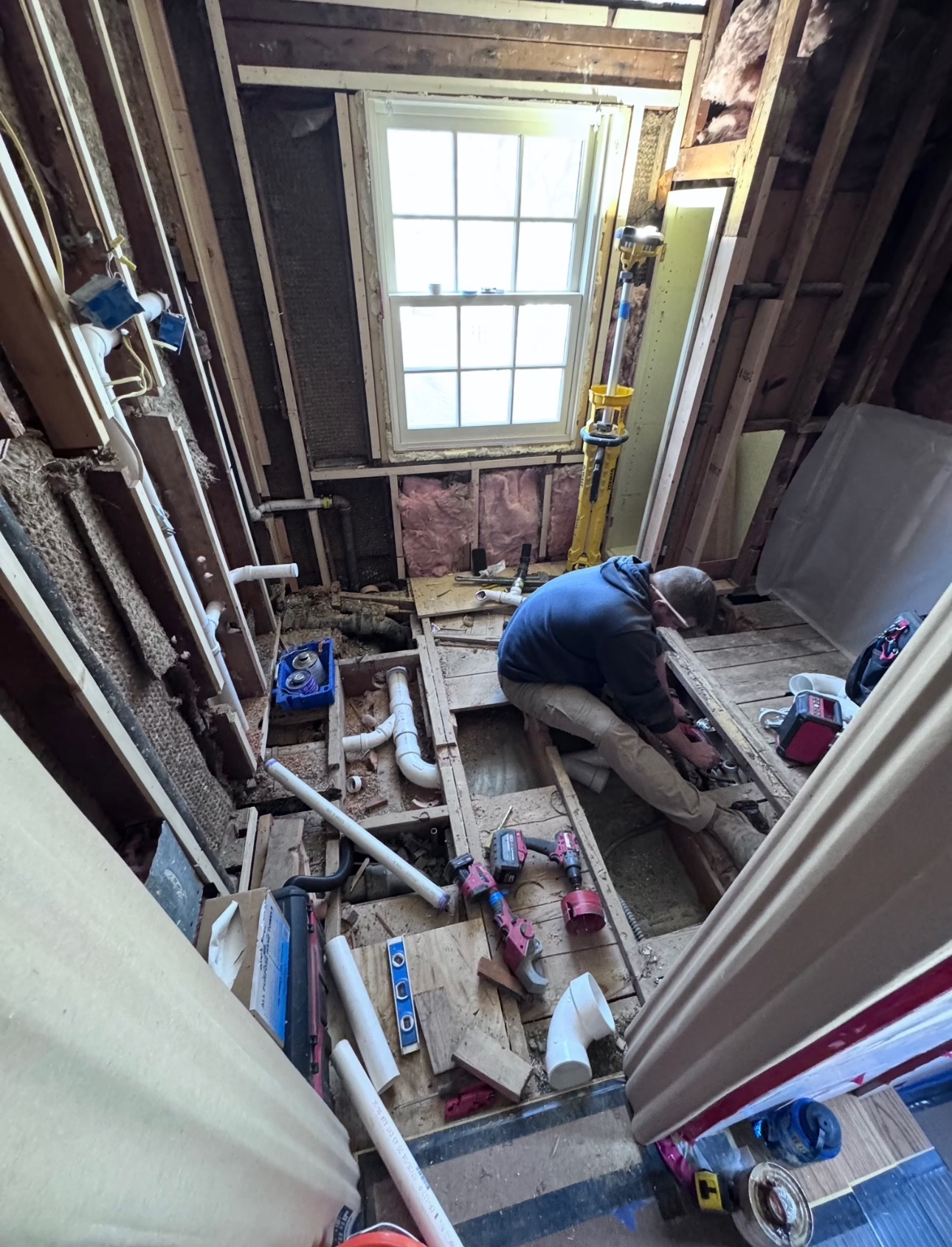
This is where an experienced plumber earns their keep. We work with a plumber and a crew he has taught and built up over the years, and in an old home — where earlier remodels can leave surprises behind the finishes — that depth of knowledge is a real asset.
Dealing with a sloping floor
One thing we nearly always run into in homes of this era is a sloping floor. It’s usually highest along the exterior wall and lowest toward the interior door. There are a few ways to handle it; here, our tile subcontractor used a self-leveling compound as the first layer of substrate. That creates a flat, level surface to build on, so the finished components — the vanity, the toilet, and the rest — set quickly and cleanly with minimal adjustment.

The result
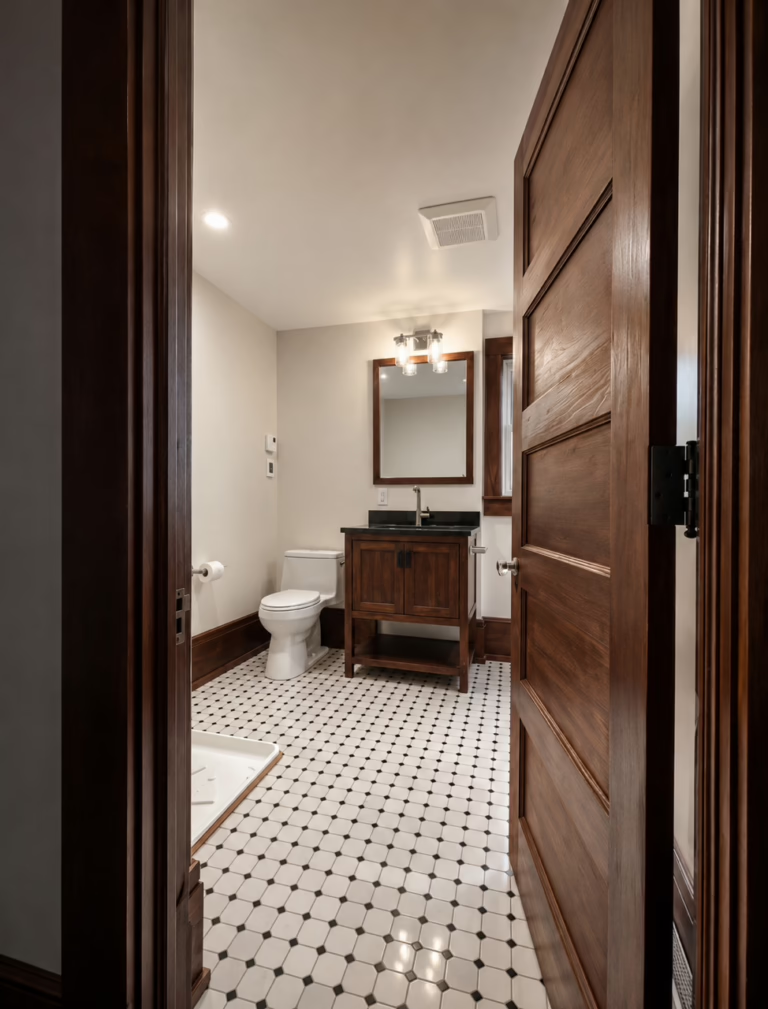
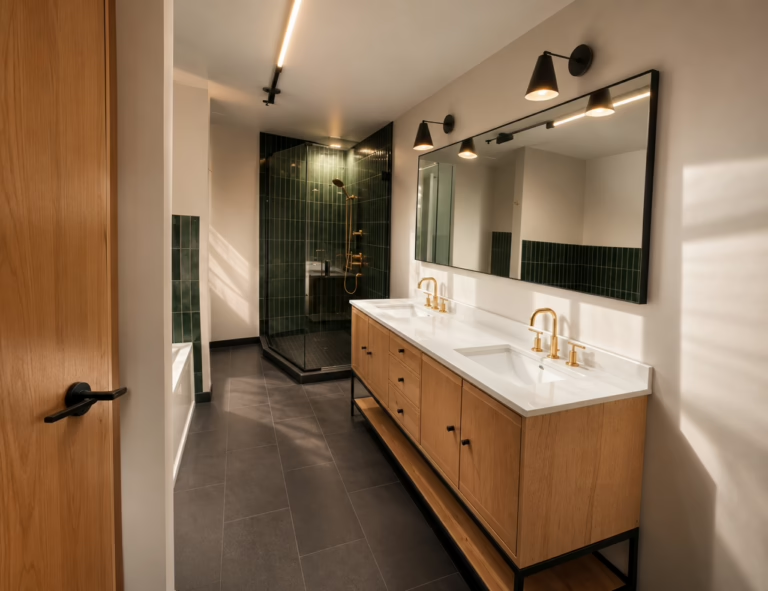
The finished bathroom keeps its original footprint but feels like a completely different room: deep green vertical wall tile, a white basketweave floor with black accents, a dark wood vanity with a white countertop, warm brass-toned fixtures and sconces, and a clean tub-and-shower. What had been a bathroom with plenty of space but little function is now a comfortable, hardworking room ready for the whole family.

Frequently asked questions
Can you move a toilet when remodeling an old bathroom?
Often, yes — but how far depends on the existing framing and on plumbing code. In older homes we develop routing options first, then have our plumber confirm what’s actually possible once we understand the structure, sometimes only after the floor is opened up.
Do I have to bump out walls to improve a bathroom’s layout?
Not always. We looked at expanding into an adjacent bedroom for this project, but reorganizing the plan within the existing footprint — and changing the door swing — gave the family the function they wanted without enlarging the room.
Why isn’t my old bathroom floor level?
Floors in older homes often settle over time, typically sitting higher at the exterior wall and lower toward the interior. A self-leveling underlayment can create a flat, level base for the new finishes.
Thinking about a project like this?
Tell us about your kitchen or bath and we’ll follow up to set up a first conversation — no pressure, no sales call.