Restoring a Downtown Minneapolis Condo After Water Damage: What It Takes Inside a Multi-Unit Building
What began as an insurance repair after water damage became an opportunity for the homeowners to go beyond simple repairs and truly make their downtown loft their own. Alongside restoring the water-damaged areas, we added a shower to the second bathroom and addressed several other issues throughout the home. Because this was a condominium, the project carried design, construction, and code considerations that simply don’t exist in a typical single-family house. Here’s what a restoration like this involves, what it cost, how long it took, and why remodeling inside a multi-unit building is a different animal.
The home
A two-level, loft-style condo in a North Loop riverfront building in downtown Minneapolis. (We describe our clients’ homes by neighborhood only – names, unit numbers, and addresses stay private.)
The project
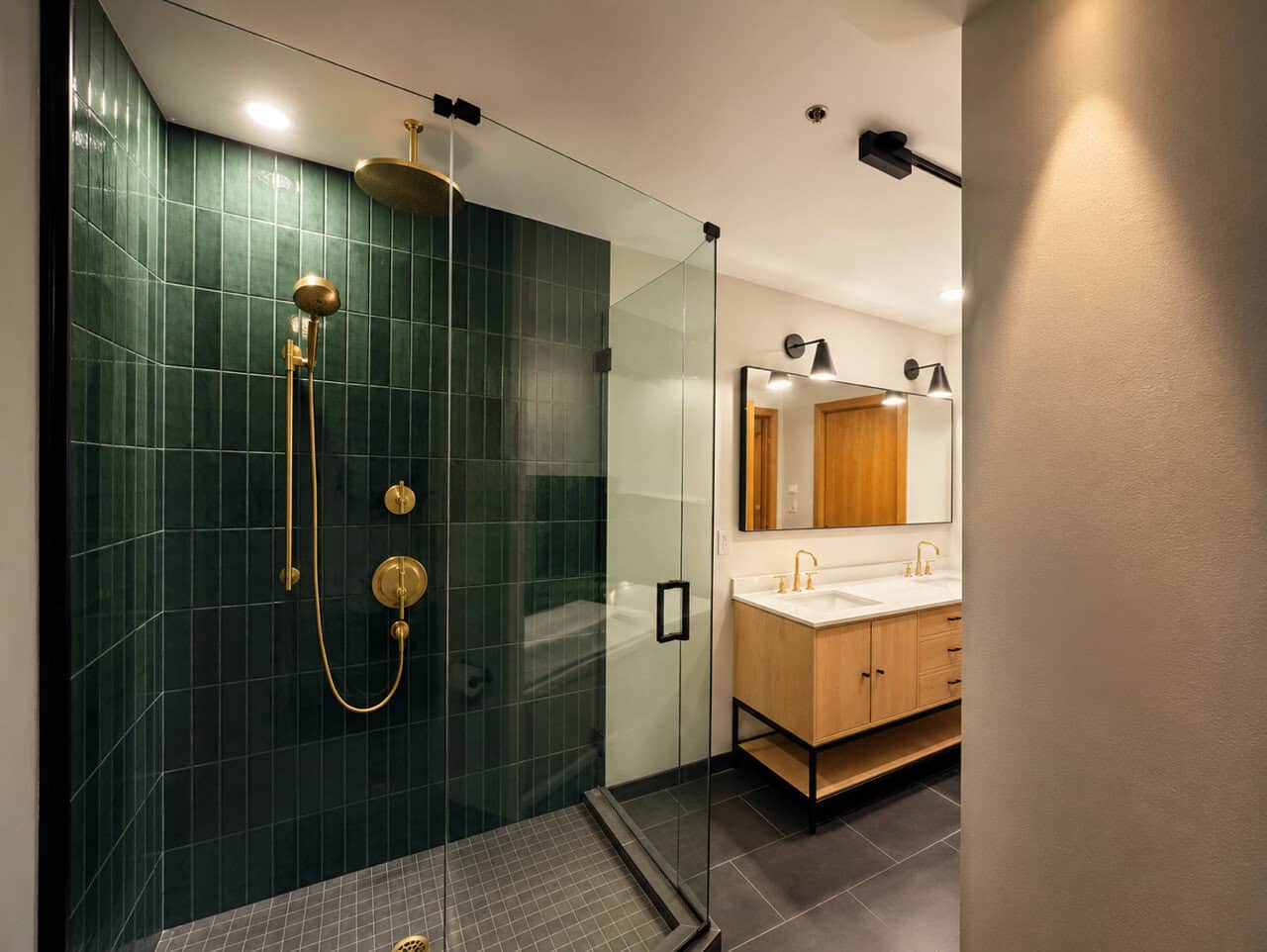
This started as an insurance restoration after a water event and grew into a thoughtful rebuild. Along with repairing the damaged areas, we converted the second bathroom from a half bath into a full bath with a shower, refreshed finishes throughout, and solved a handful of comfort and code issues along the way. The goal was never just to put the unit back – it was to hand back a home that worked better than before.
What it cost
A whole-unit restoration on this scale – two full bathrooms, the laundry, closets, and living spaces, plus refinished flooring – landed in the $150,000-$170,000 range. We price to the value of the finished result, and insurance restorations vary widely depending on the extent of the damage and the finishes chosen for the rebuild.
What drove the cost
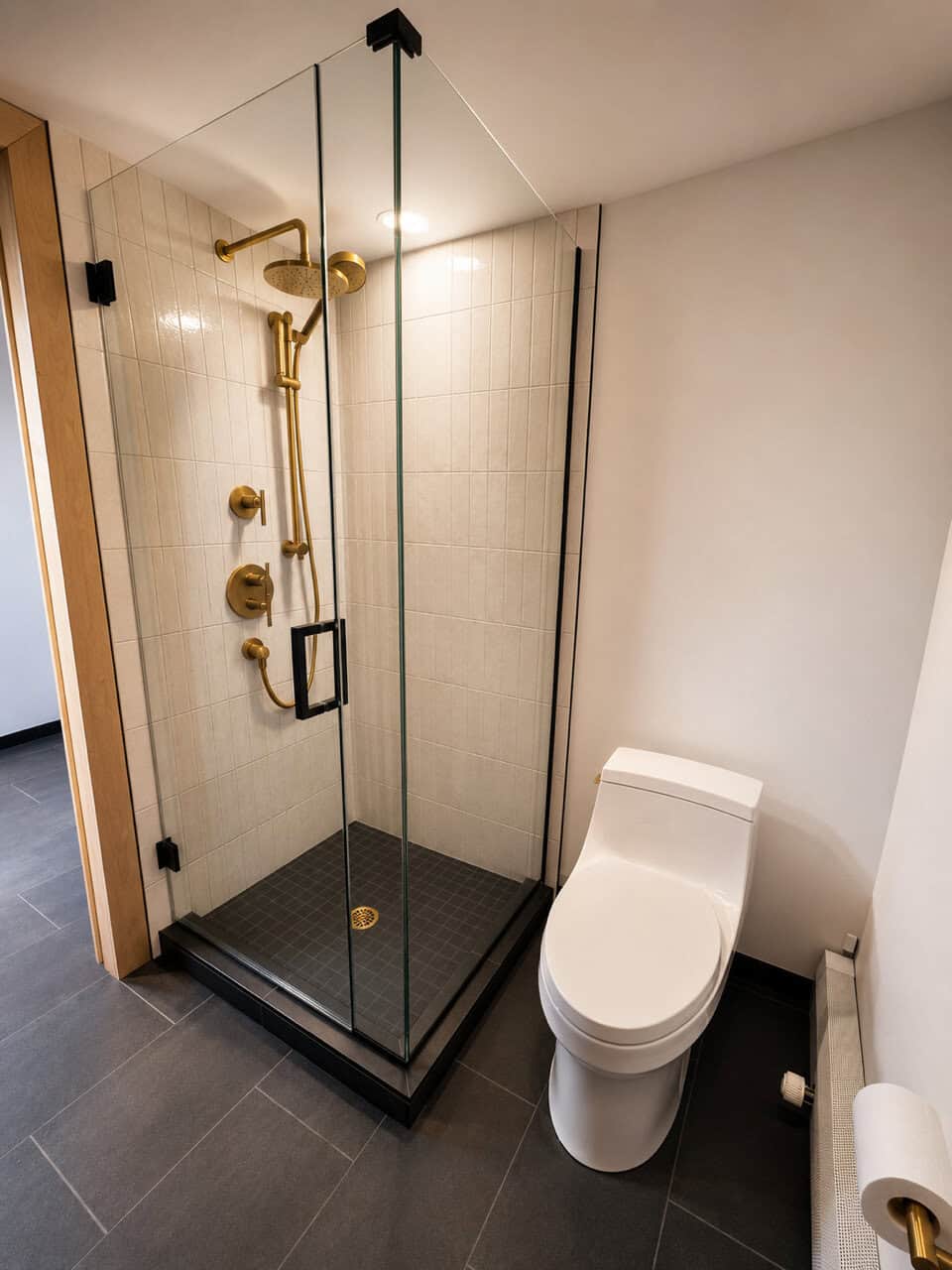
The fully tiled bathrooms – custom shower pans, in-floor heat, and glass enclosures – were the biggest part of the budget. On top of that, working inside a downtown high-rise adds real coordination cost: protecting shared hallways and the parking garage, planning freight and dumpster access through the building, and meeting the building’s own requirements, including a sprinkler permit and inspection. Those are costs you don’t run into in a single-family remodel.
Timeline
On-site construction ran about 17 weeks – from the first week of rough-in in early October 2023 through the final building inspection and move-in in mid-January 2024 – with punch-list items and the final wrap-up completed that spring. Design, permitting, and insurance approvals stretched the calendar longer, as they tend to.
Living through it
For a rebuild this extensive, the homeowners moved out so we could work freely across both levels, then moved back in at completion. After a water event, the whole point is getting someone home again – and that goal shaped every decision we made.
What a multi-unit building threw at us
In an older single-family home, the surprises hide behind plaster. In a concrete high-rise, the challenges are structural and code-driven – and they’re exactly why a condo remodel calls for a different kind of experience.
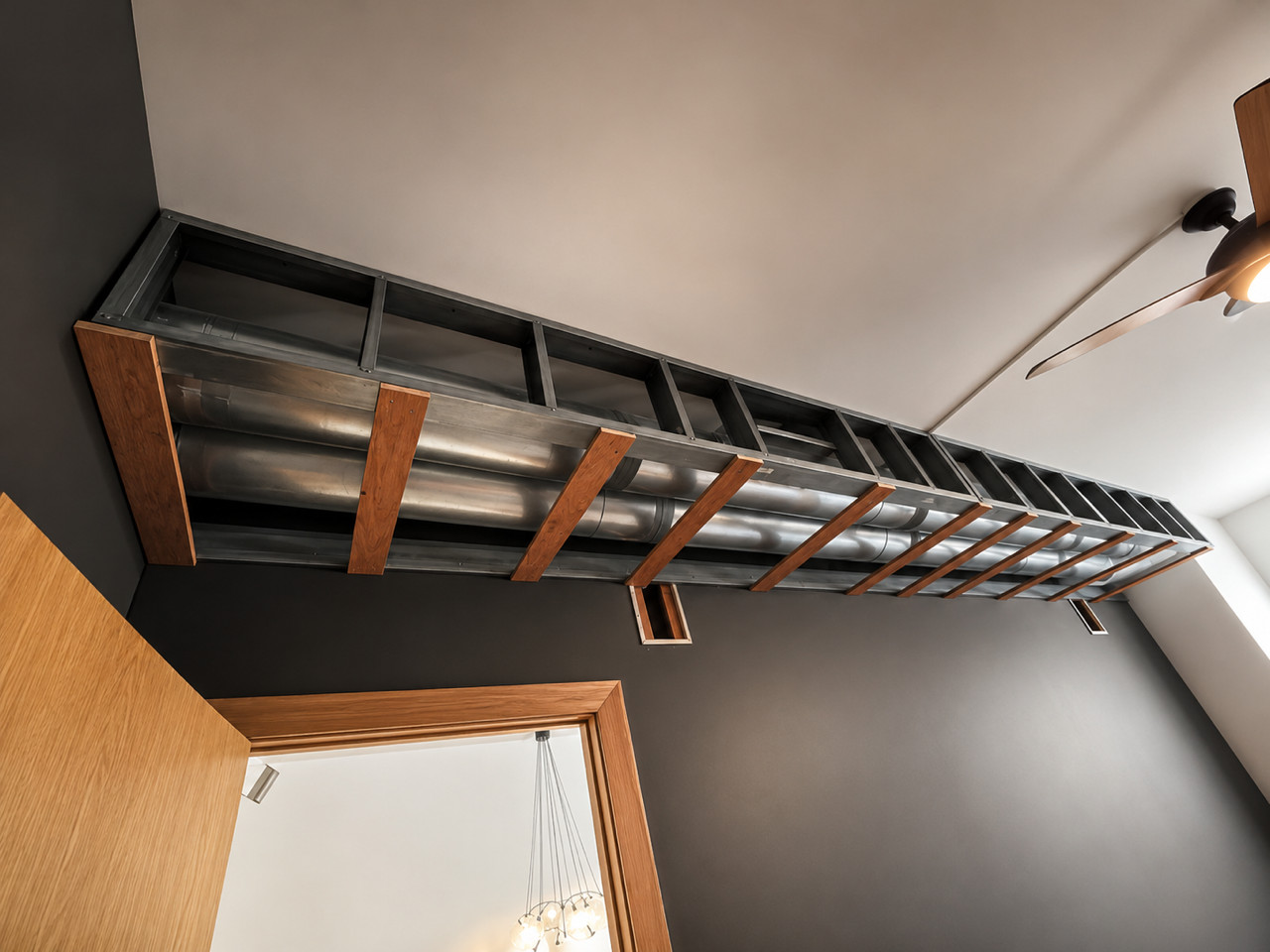
Comfort at the windows. Large floor-to-ceiling windows on the upper level created significant heat gain in summer and heat loss in winter. The HVAC system technically served the space, but the ductwork didn’t reach close enough to the glass to condition it properly, so the room was never as comfortable as it should be. Working with our HVAC contractor, we developed a solution that improved airflow while protecting the clean, modern look of the loft – framing a compact soffit to conceal new ductwork while preserving as much of the room’s volume and openness as possible.
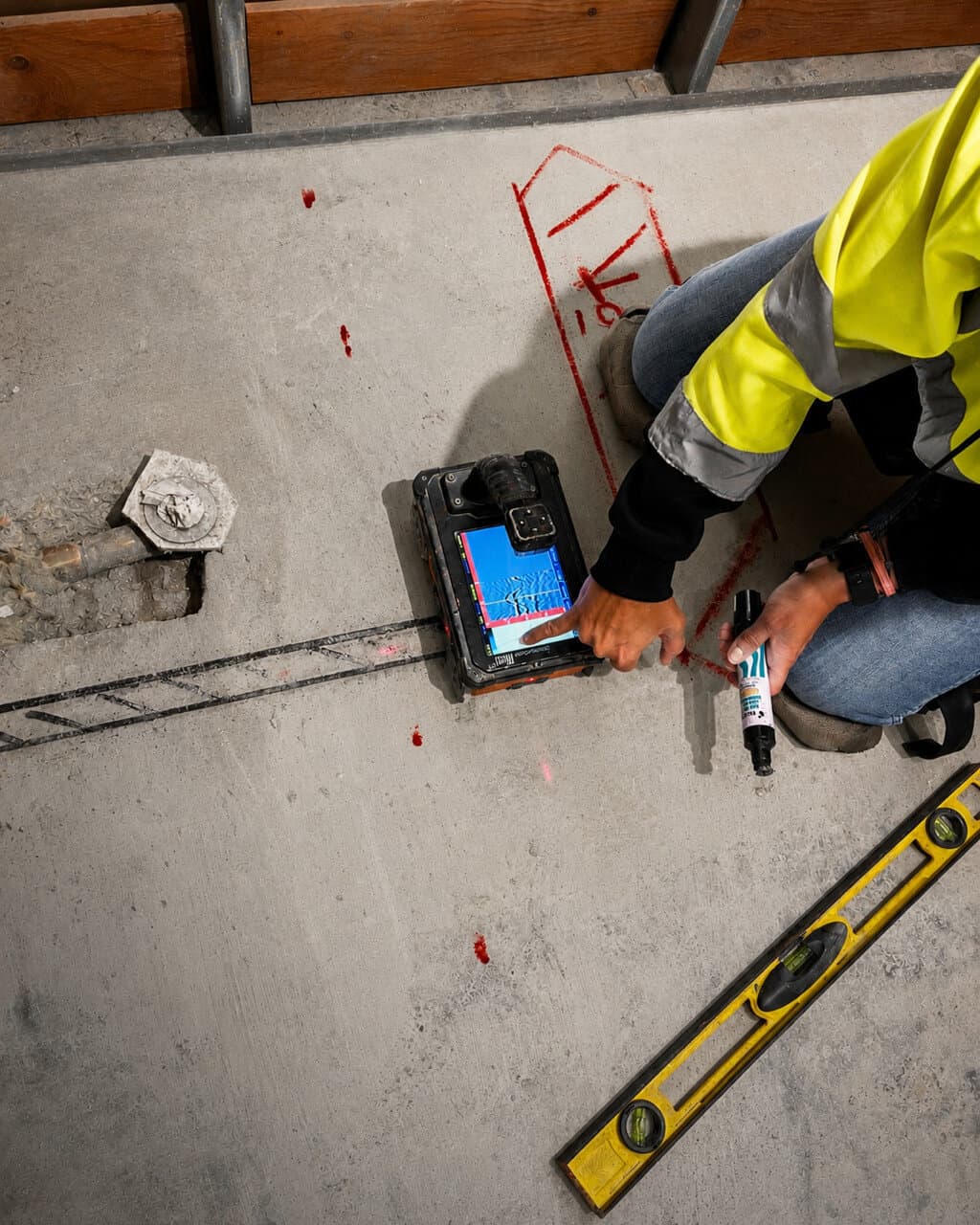
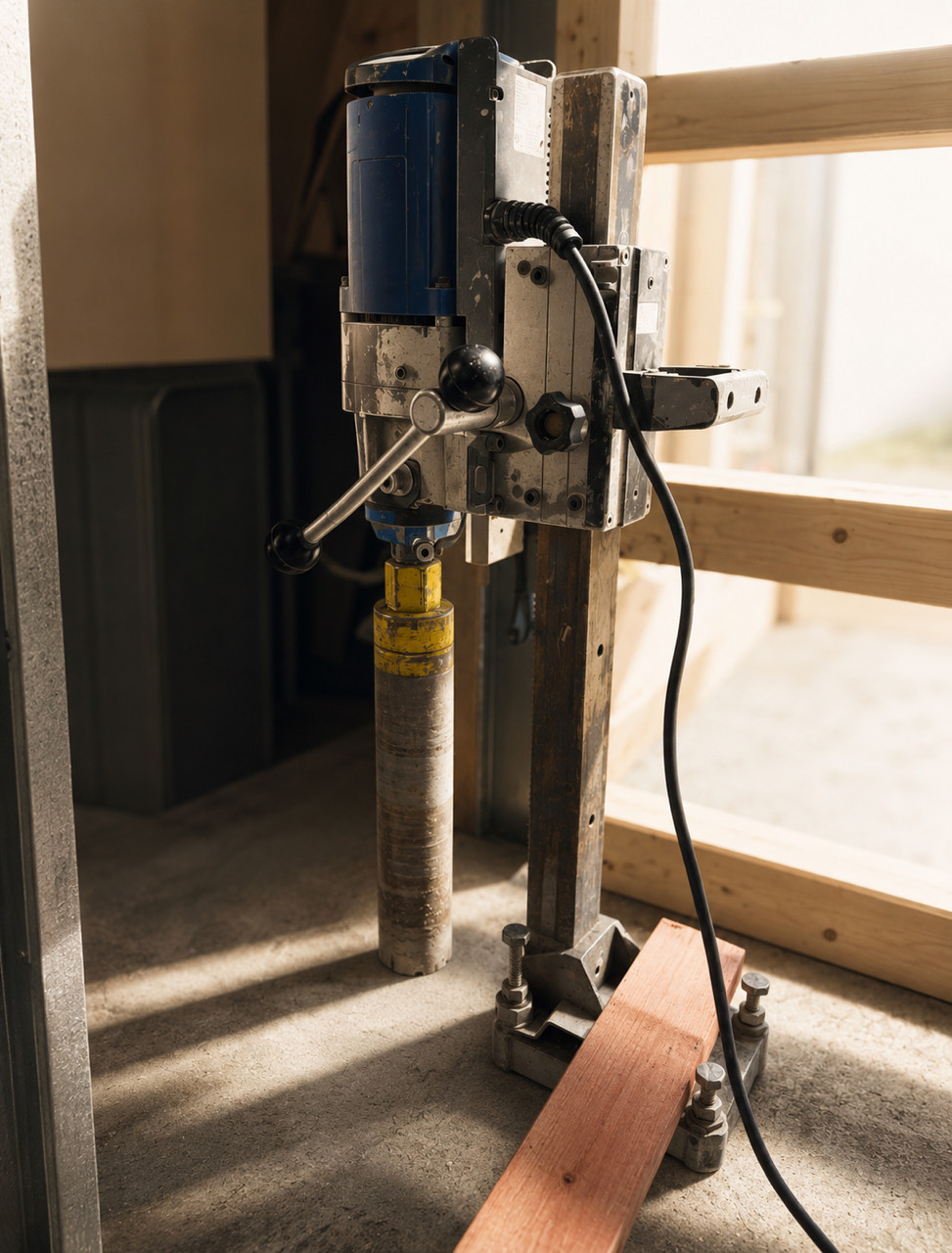
A shower through a post-tension slab. Converting the guest half-bath into a full bath meant running a new drain line through a post-tension concrete floor. That work begins with specialized scanning to map what’s embedded in the slab: cutting a post-tension cable can compromise the structural integrity of the building, so finding a safe drilling location is critical. Once the slab was scanned and a location approved, a specialty contractor used a water-cooled core drill to cut through roughly eight to nine inches of solid concrete.
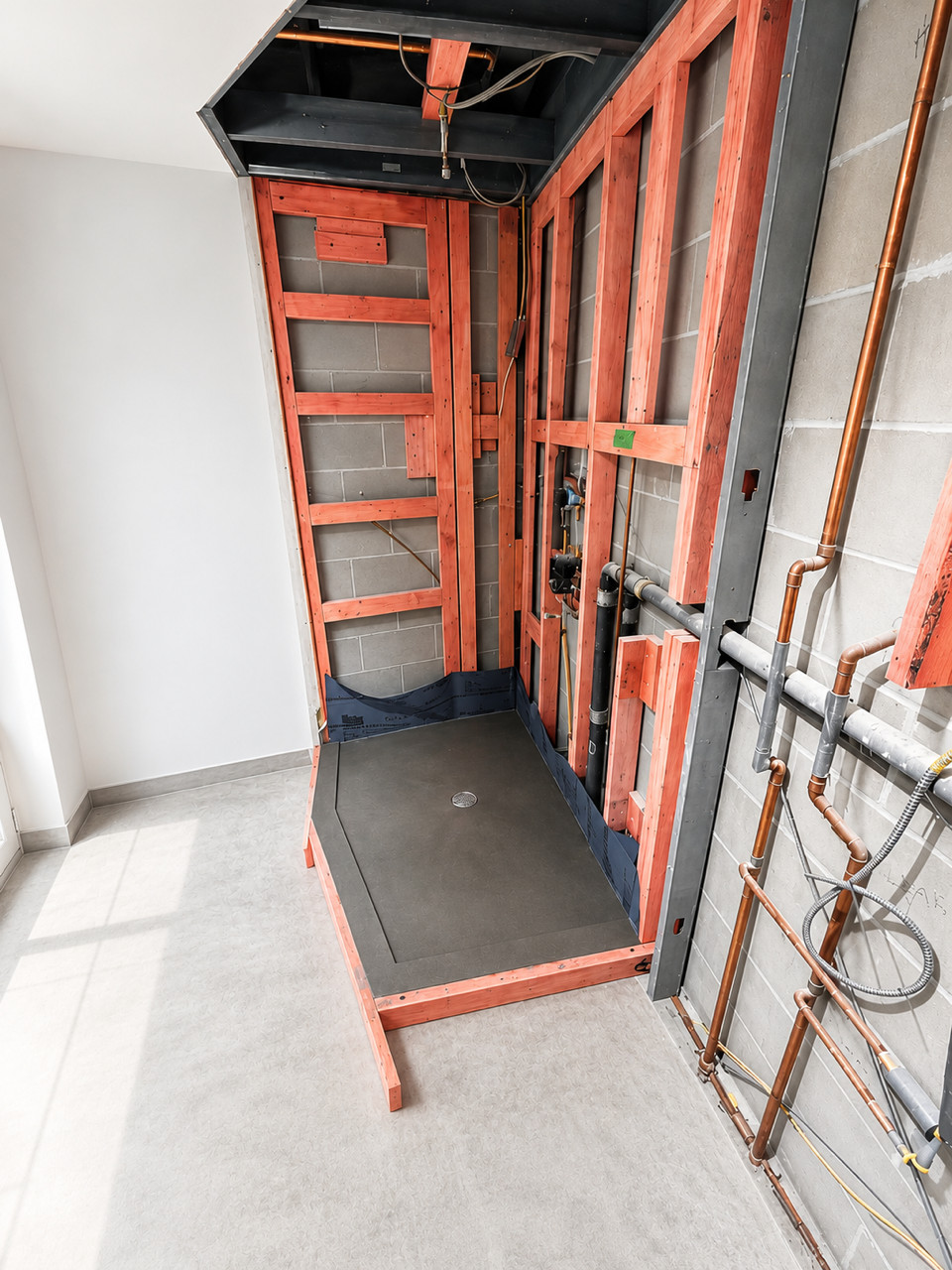
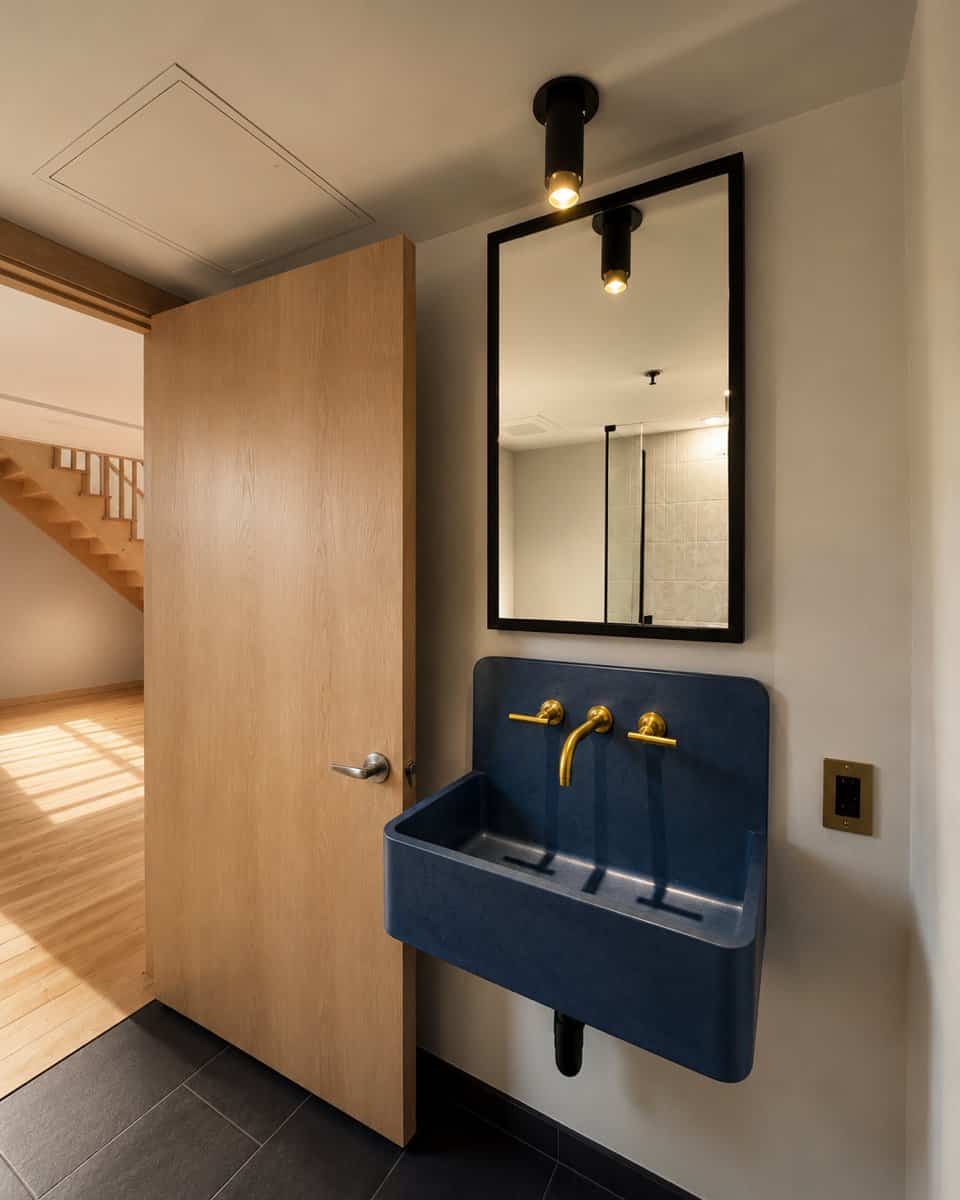
Fire-safety framing. Multi-unit buildings carry fire-resistance requirements that go well beyond most single-family homes. Much of this building was originally framed in metal studs. Where additional framing was needed – particularly in the bathrooms – we used fire-retardant-treated lumber, which is manufactured to slow combustion and is easy to spot by its distinctive pink color. It gave us the attachment strength, rigidity, and blocking required for features like a wall-mounted concrete sink while still meeting the building’s fire-resistance requirements. Around new ductwork, we used metal framing wherever practical.
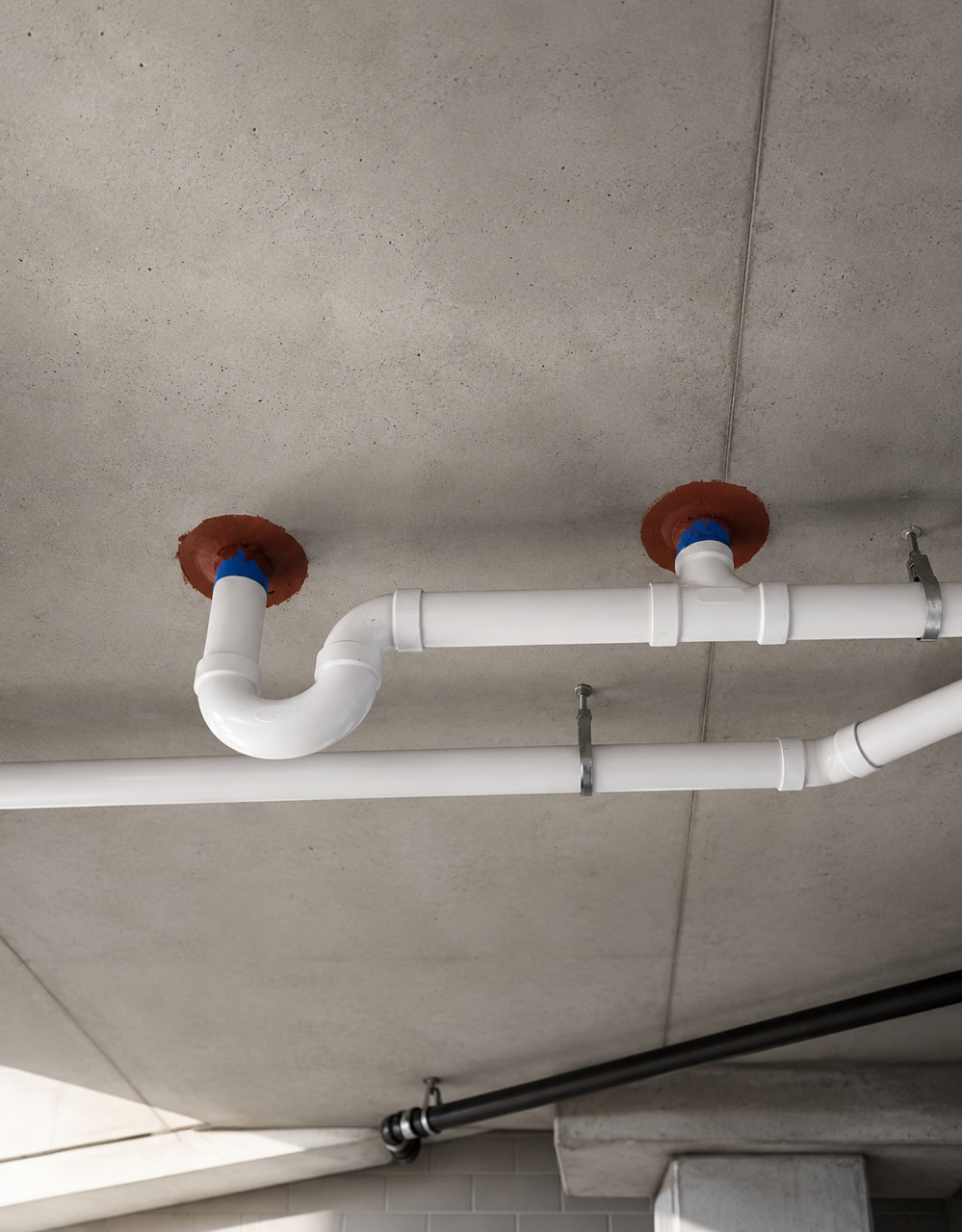
Sealing the penetrations. Anywhere pipes passed through concrete or fire-rated construction, we installed intumescent firestop sealant – often red in color – which expands when exposed to heat to help maintain the fire rating of the assembly and slow the spread of fire and smoke between units.
Selections & craft
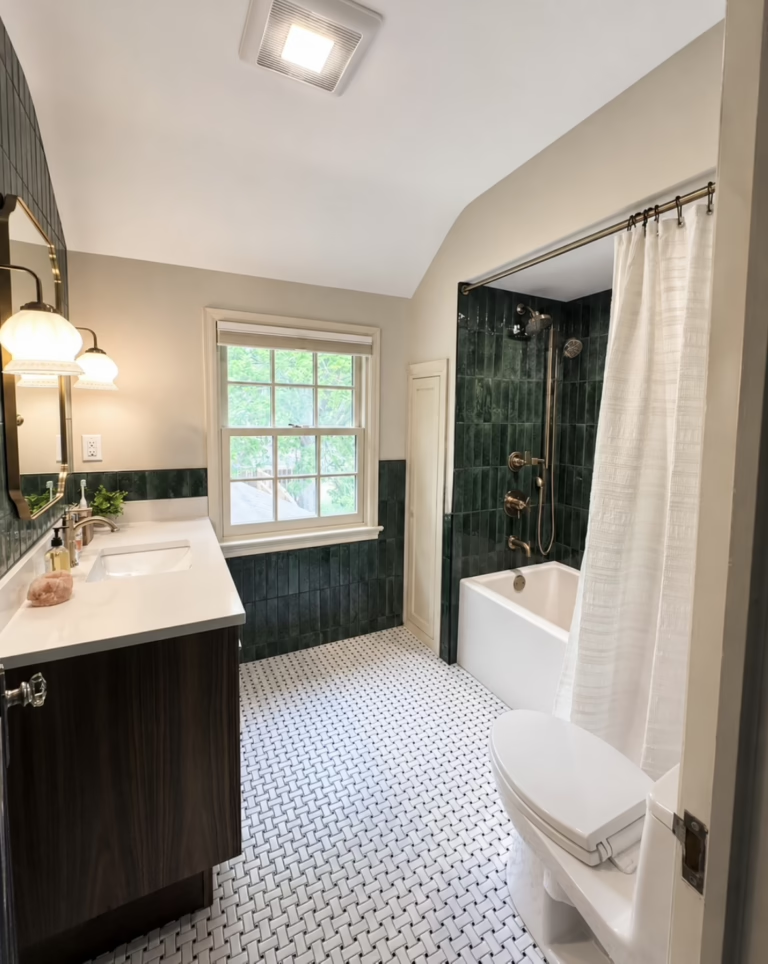
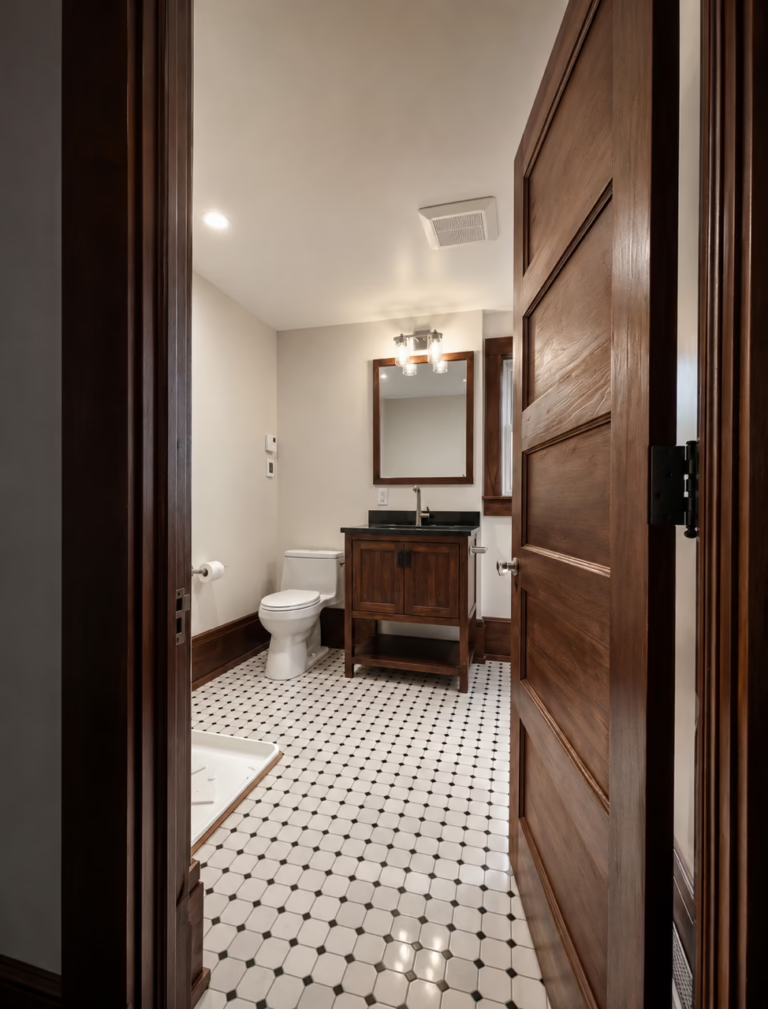
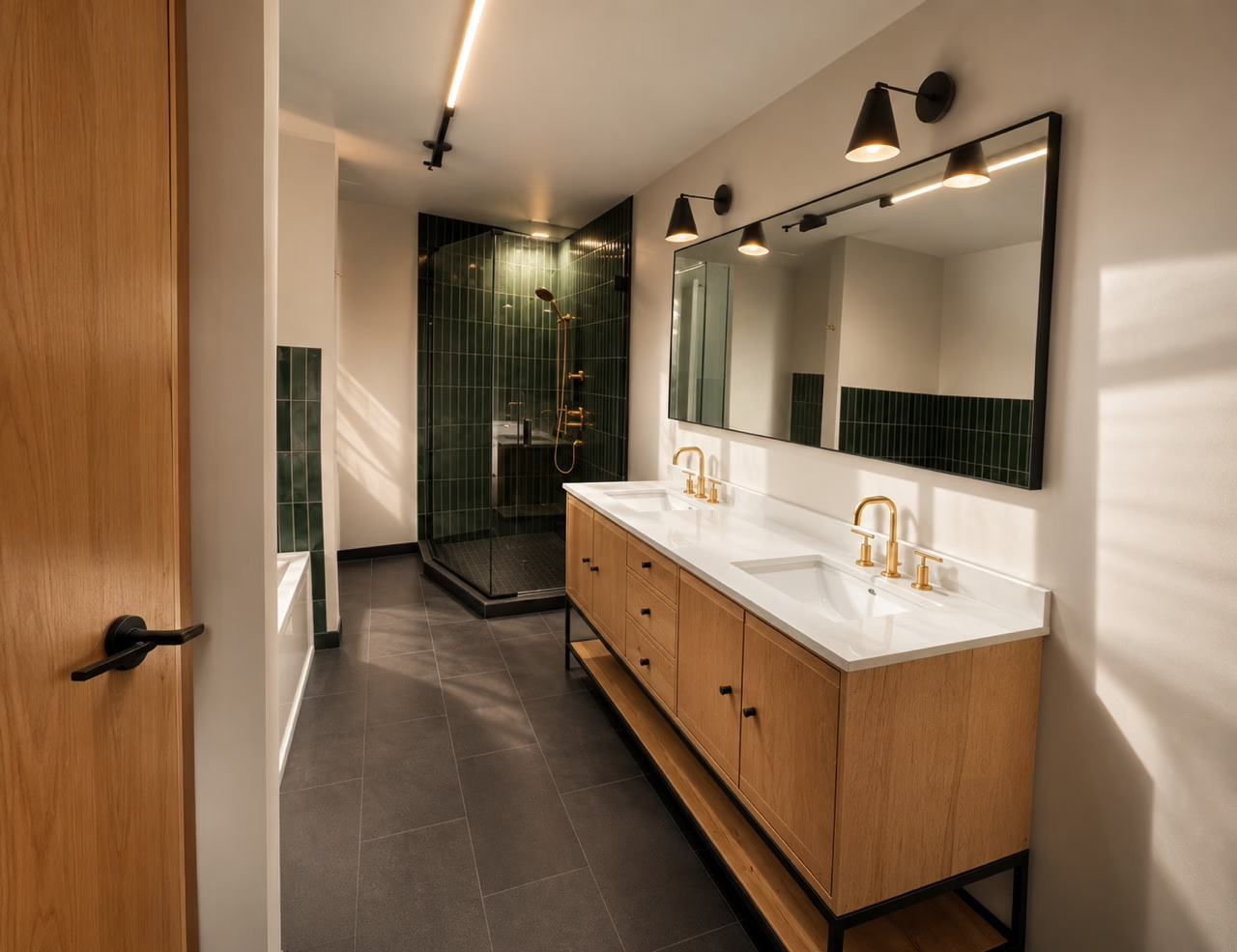
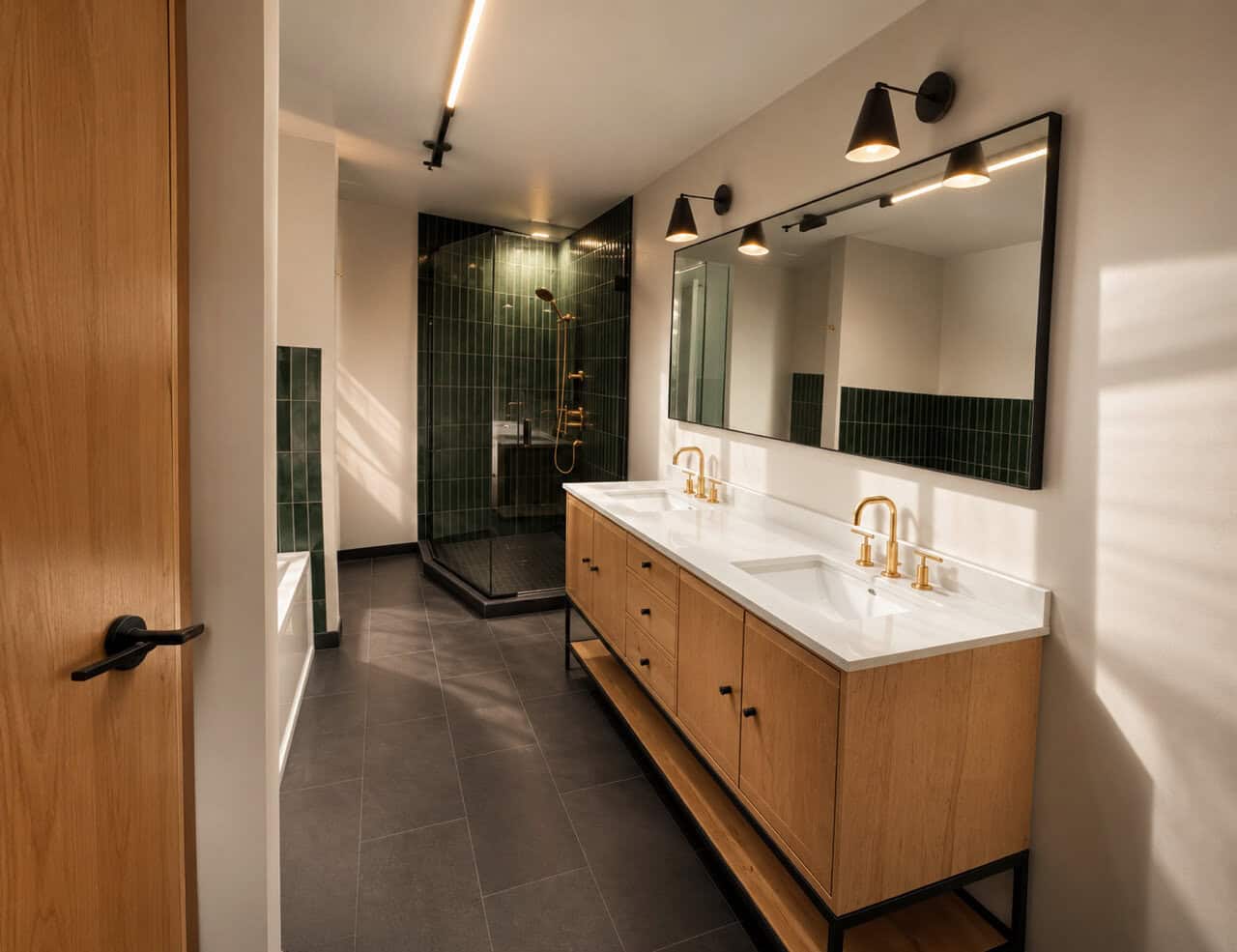
Both bathrooms share a consistent design language: large-format tile with a deep, contrasting grout, in-floor heat beneath the tile for everyday comfort, and frameless glass enclosures, with smart lighting carried through the unit. The result reads calm and cohesive rather than pieced-together – exactly what you want when you’re rebuilding a home from the studs out.
The result
A damaged loft became a calm, finished home again. Beyond the technical challenges, the most rewarding part of the project was helping the homeowners restore a space that had been out of commission for an extended time and turn it back into a home that better reflected their needs, style, and vision. In their own words after move-in: “I took a shower in the new master bath today and am lost for words.”
Frequently asked questions
What does it cost to restore a condo after water damage in Minneapolis?
This downtown loft restoration – two full baths, laundry, closets, living spaces, and refinished flooring – ran about $150,000-$170,000. Insurance restorations vary widely with the extent of the damage and the finishes you choose for the rebuild.
How long does a restoration like this take?
About 17 weeks of on-site construction here, after design, permitting, and insurance approvals. Downtown high-rise work runs a little longer because of building coordination.
Do you have to move out during a full condo restoration?
For a whole-unit rebuild like this one, yes – the homeowners moved out so we could work efficiently across both levels, then moved back in at completion.
What’s different about remodeling in a downtown condo building?
Coordination and code. We handle the building’s requirements – protecting shared spaces and the parking garage, the freight and dumpster plan, fire-rated framing and firestopping, and any sprinkler permit and inspection the building requires – so you don’t have to.
Thinking about a project like this?
Tell us about your kitchen or bath and we’ll follow up to set up a first conversation — no pressure, no sales call.