The Trouble with Galvanized Pipe in Older Twin Cities Homes
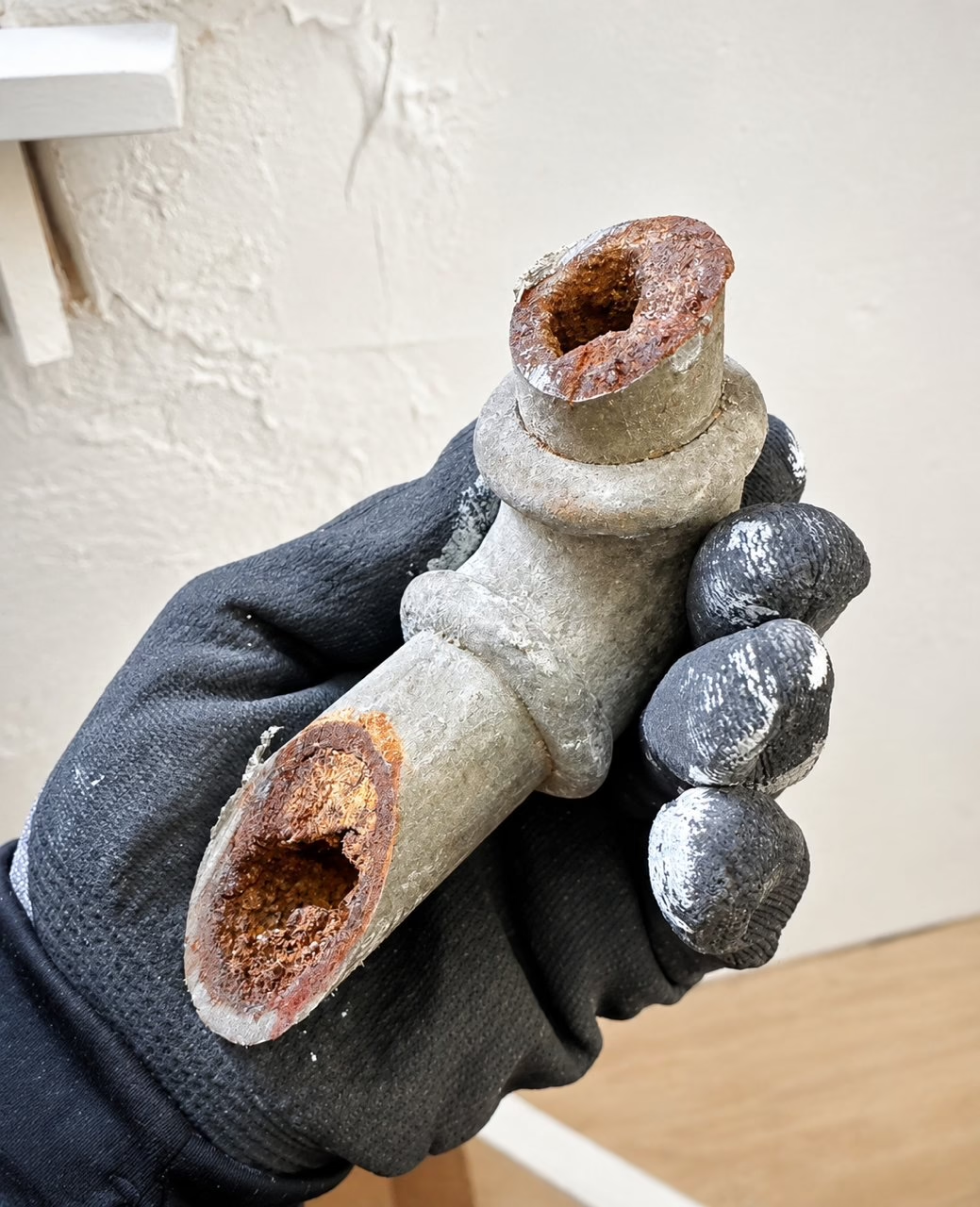
Most of the older Twin Cities homes we remodel — plenty of them close to a century old — still have their original galvanized supply lines in place. Those lines have a way of adding work to a remodel that has nothing to do with the remodel itself: they degrade over time, clog with mineral deposits, and can send that debris straight into the new fixtures you just paid for. Here’s what galvanized pipe actually does as it ages, and how we handle it on our projects.
What Galvanized Pipe Actually Is
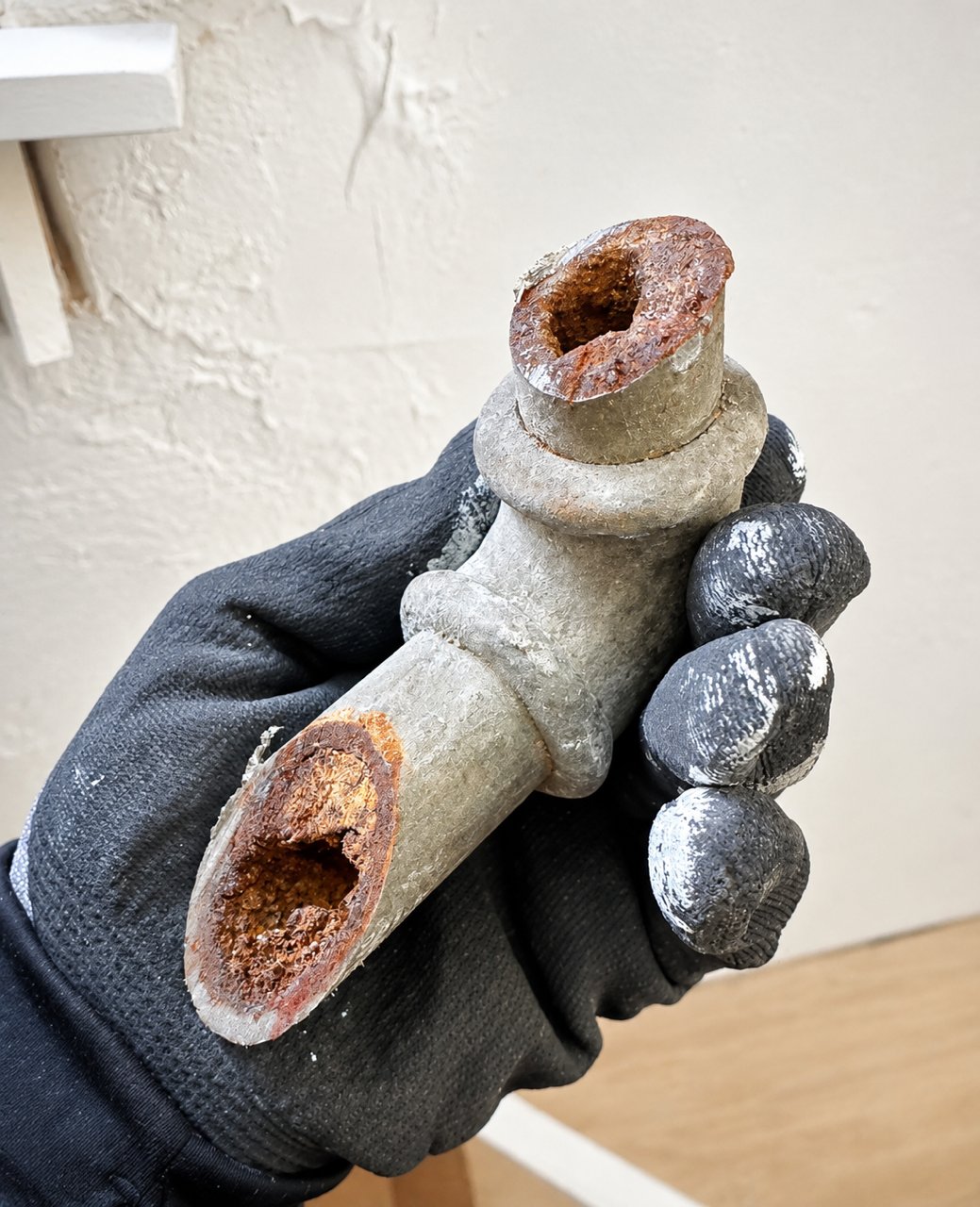
Galvanized pipe is steel pipe dipped in a protective zinc coating. The zinc is sacrificial by design — it’s there to take the corrosion instead of the steel underneath. Decades of water moving through the line wear that coating away, exposing the steel, which then rusts and scales from the inside out. Most galvanized supply lines went in before the 1960s, and typical service life runs 40 to 70 years, which means nearly every galvanized line in a 100-year-old house is past due.
Brittle Pipe and Surprise Leaks
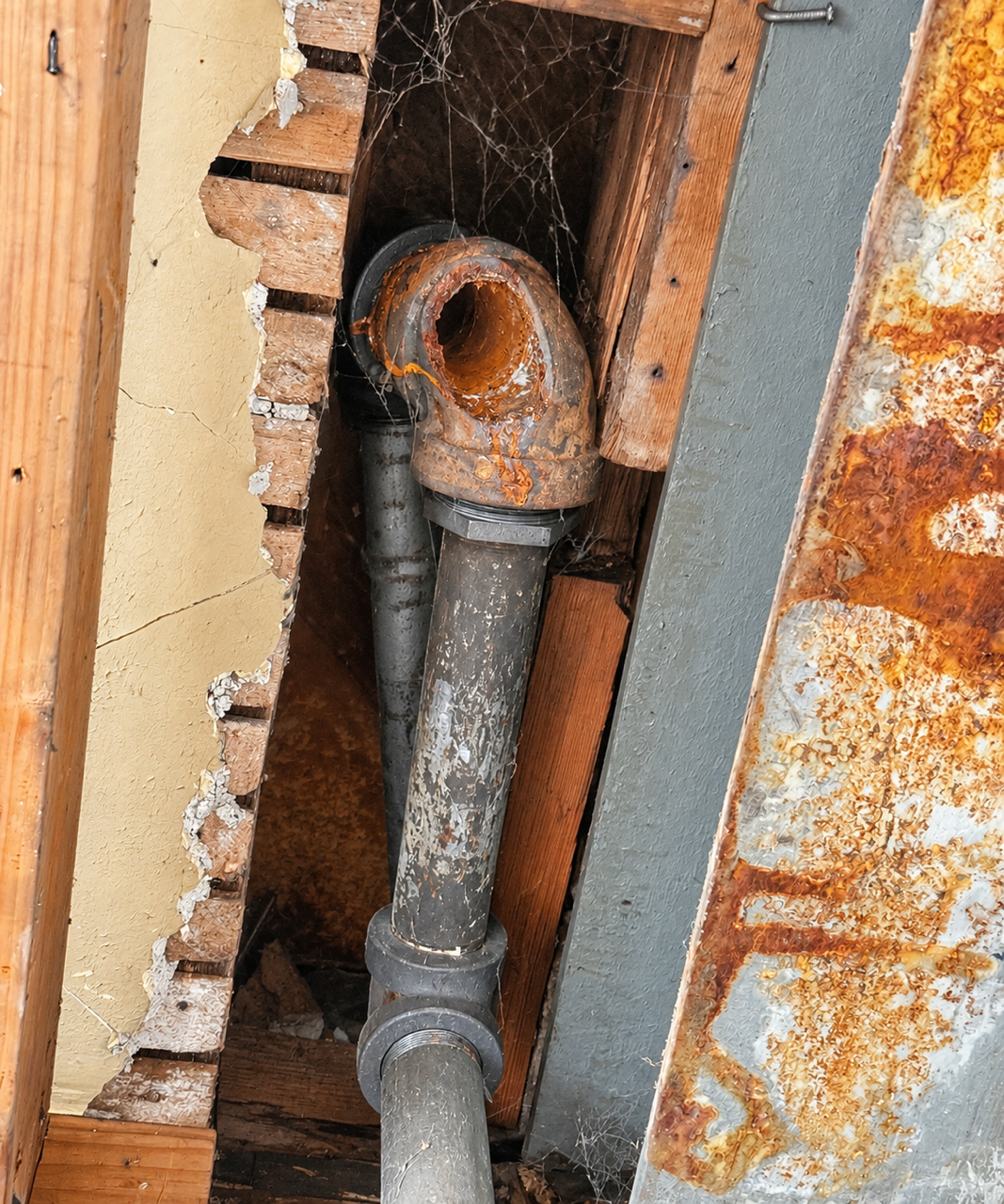
The pipe wall thins out over the decades and turns brittle, and that’s especially true when a line is left dry during a remodel. We’ve seen leaks caused not by use but by disuse: the pipes get drained for a project, sit dry for the six to eight weeks of a build, and when the water comes back on, the weakened material gives way and breaks. Sometimes it’s a pinhole weep, sometimes a steady drip, occasionally something worse. We’ve also opened walls to find pipe so far gone it had to be replaced outright.
Mineral Buildup and “Low Water Pressure”
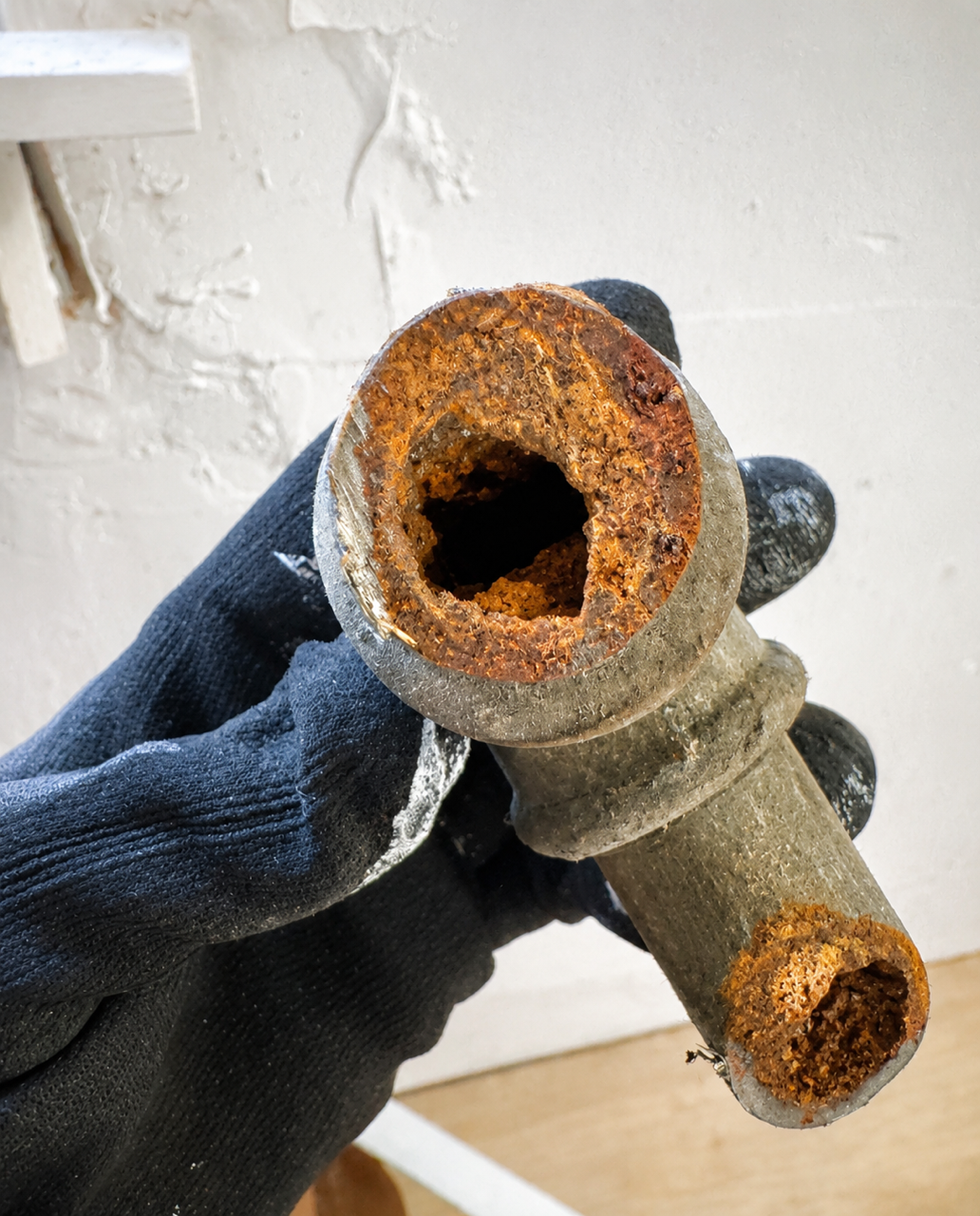
During normal use, scale flakes off the pipe wall and collects downstream — at elbows and bend points, or in the last stretch of pipe before a fixture — narrowing the interior diameter and choking flow. Homeowners often tell us they have a water pressure problem. Usually they don’t; the pressure coming into the house is fine. It’s the path the water takes to get to the faucet that’s the problem.
The Fixture Is Part of the Problem Too
Some of that debris ends up inside the fixture itself — in the cartridge, and in the aerator and flow restrictor (the small screen assembly on a faucet tip, and the insert that limits flow in a faucet or showerhead — both easy to clog and easy to overlook). Replace the pipe but never flush or replace the fixture, and you’ll see an improvement — just not the improvement you should be getting.
How We Handle It
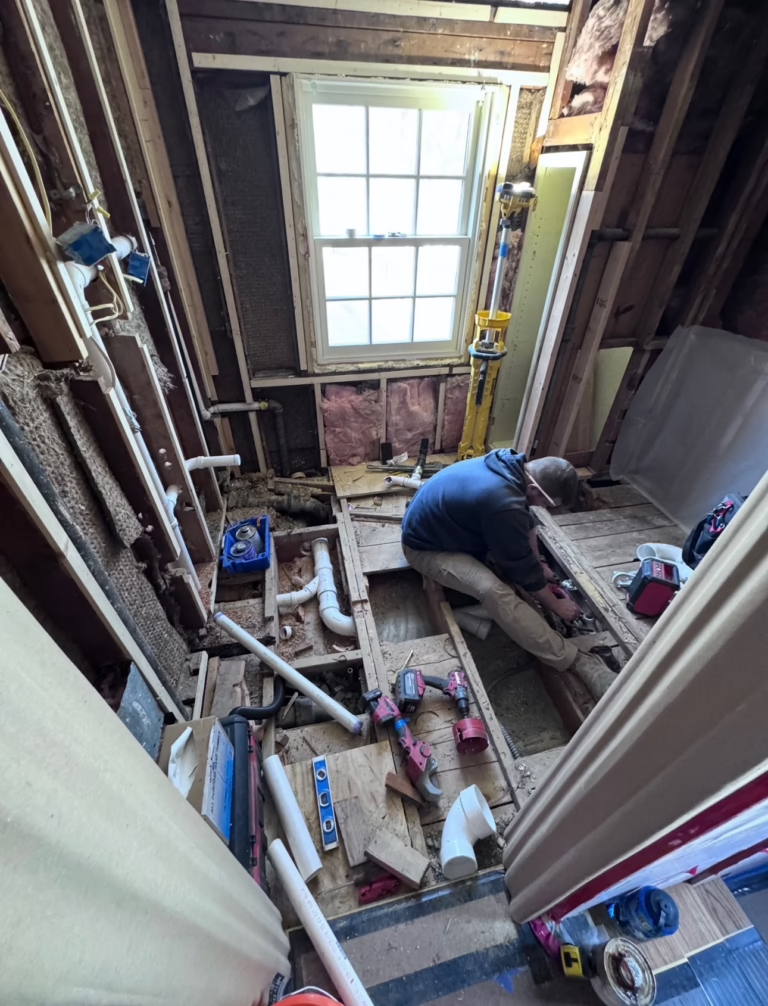
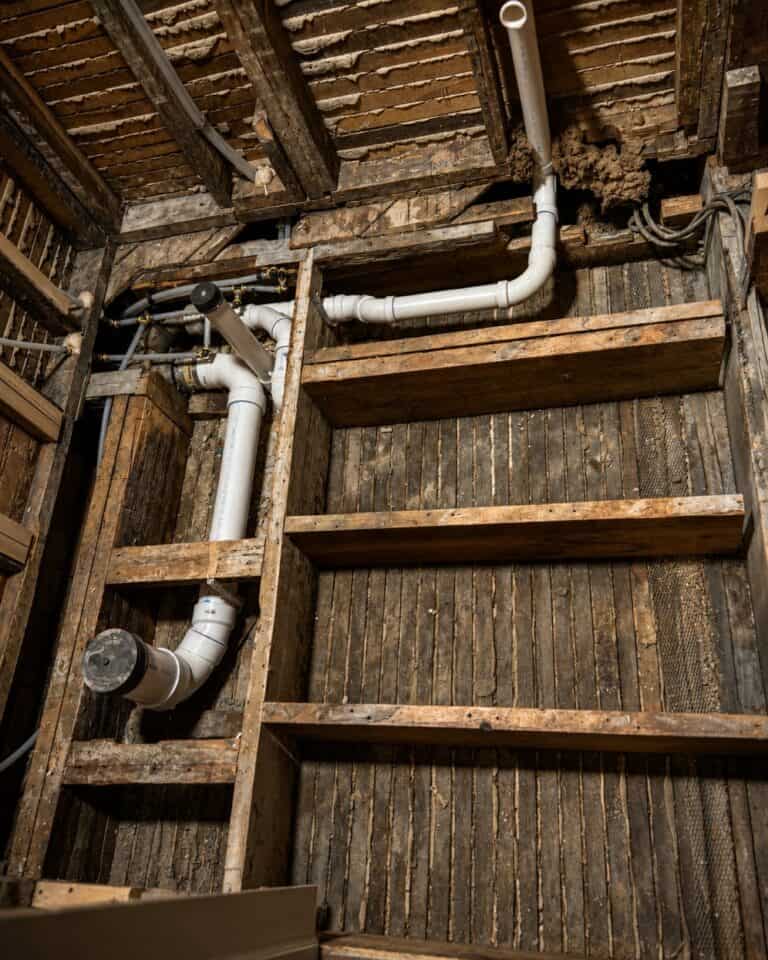
On our projects, we replace as much of the existing galvanized pipe as we can reach — all of the rough-in piping exposed during demo, and where we can feed new line through the walls, we run it back to the original supply lines in the basement. Copper that’s intact and not corroding stays where it is. Often it’s the connections in the last foot or so before a fixture that have degraded, so we replace that stretch with PEX unless code requires copper.
The Bottom Line
Galvanized lines aren’t bad pipe — they’ve simply reached the end of their lifespan in a home. That makes them a poor place to cut costs during a remodel: skip the work now and you’ll be chasing the same problems later, from behind newly refinished floors and walls.
FAQ
How do I know if my house has galvanized pipe?
If your home was built before the 1960s and the supply lines haven’t been replaced, they’re likely galvanized steel. A plumber or contractor can confirm during a remodel or inspection.
How long does galvanized pipe last?
Typical service life runs 40 to 70 years. Most galvanized lines went in before 1960, so nearly every galvanized line in a 100-year-old house is past its expected life.
Will replacing galvanized pipe fix my low water pressure?
Often, yes — but only if the fixture itself is also flushed or replaced. Debris that scaled off the old pipe can still be clogging the aerator or flow restrictor even after the pipe is gone.
Do you replace all the galvanized pipe during a remodel?
We replace as much as we can reach — all rough-in piping exposed during demo, fed back to the original basement supply lines where possible. Intact copper stays; the last stretch of degraded connections before a fixture is typically replaced with PEX unless code requires copper.