HVAC and Plumbing First: Planning a New Bathroom in an Older Twin Cities Home
If you’re adding or relocating a bathroom in an older home, the smartest thing you can do is settle the HVAC and plumbing before you fall in love with a floor plan. In houses like the ones we work on around the Twin Cities, those two trades are rigid, bulky, and fussy about distance and direction — so where the ductwork and the drain can physically go ends up dictating where the toilet, vanity, and walls land. Here’s how we plan it, using a recent project where we turned a long-unused storage space into a second-floor bathroom.

Why we meet the “toughest trades” first
Adding a bathroom to a space that had been storage for decades takes careful planning. To move forward with confidence, we bring in the two trades that are hardest to route through an existing home — HVAC and plumbing — early, while the design is still on paper. Both are sizable, both have real distance limitations, and both have to be coordinated against each other, not just against the layout.
HVAC: getting conditioned air to a new second-floor bathroom
The first visit was with our HVAC contractor, to figure out how to run a forced-air duct up to a new bathroom on the second floor. After looking at what was already up there, he confirmed what we’d suspected: the existing ductwork couldn’t serve the new space. So we worked out a route down through the main floor instead. An oval duct — flatter than round, so it tucks into tight spaces — would fit inside a stud bay at the entry, running alongside the new plumbing. In the basement, the duct turns toward the furnace, which may mean disconnecting and reconnecting some existing ducts so we can keep the basement ceiling as high as possible.

Plumbing: a new drain without losing the home’s character
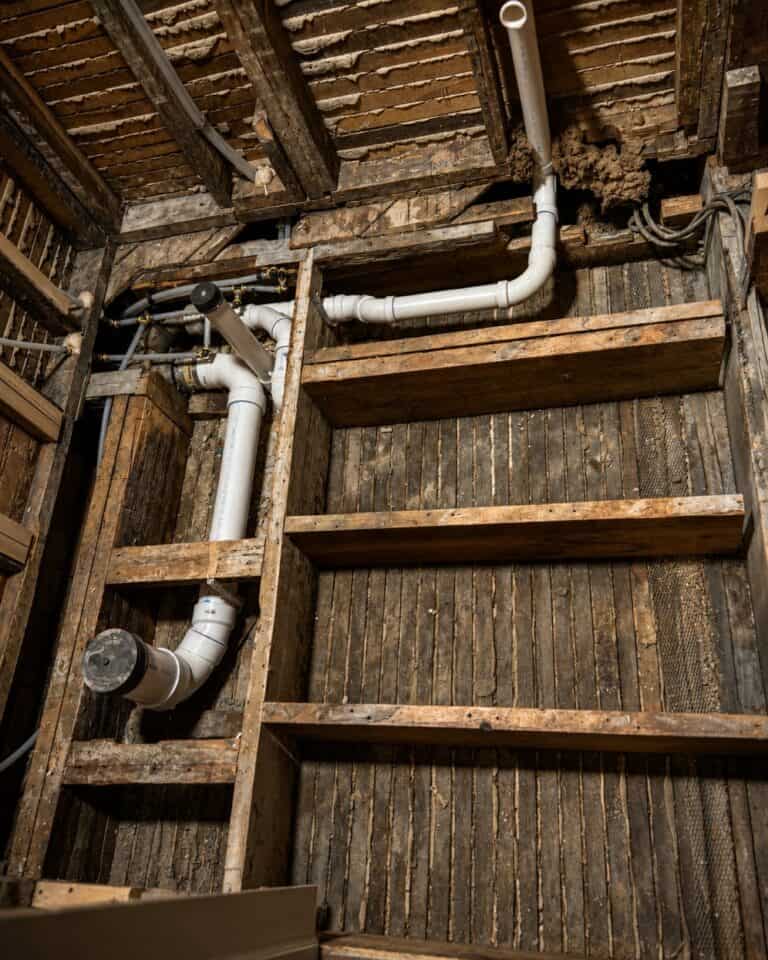
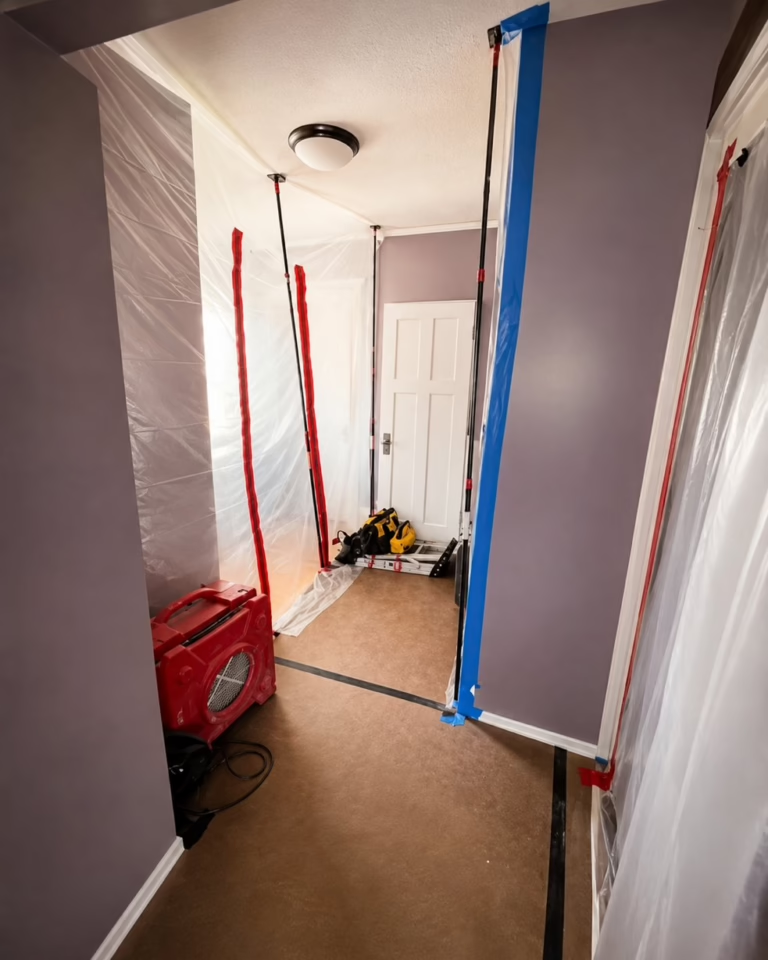
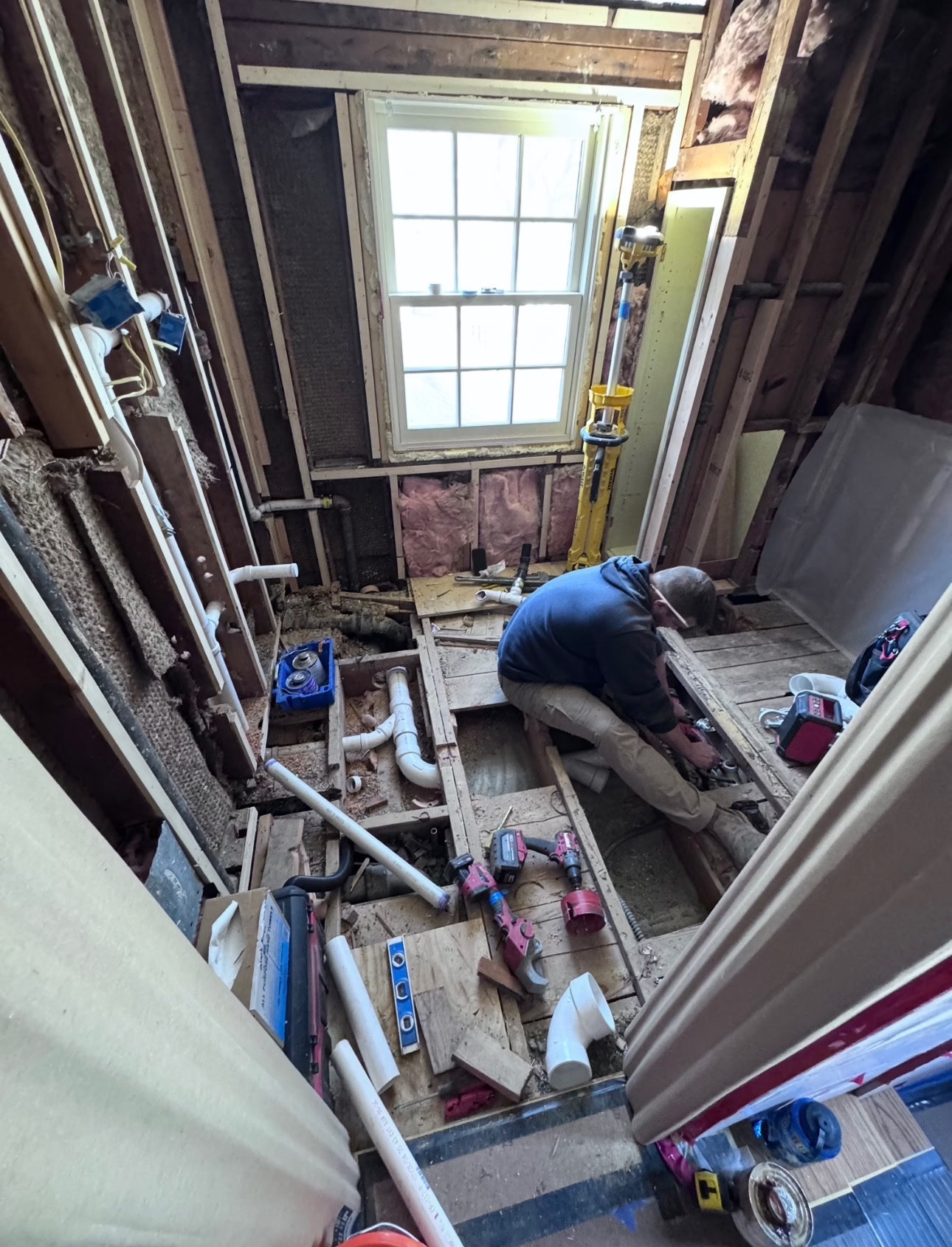
The second visit was with our plumber, to confirm we could put a new toilet drain on the second level. The feasibility wasn’t really in question — it could be done — the harder goal was protecting what makes the house special. This home has coved ceilings in the dining and living rooms, and we didn’t want to break them up. That left one place to bring the drain down through the main floor: the small entry foyer, which doesn’t have a coved ceiling.
Because the drain has to land there, the toilet upstairs can only sit in a certain part of the bathroom. To keep the pipes above the ceiling plane, we have to pass them through the floor joists — and there are limits to that. Drain lines need a consistent pitch to flow properly, and building code restricts how big a hole you can cut in a joist and where it can go, so the structure stays sound. The only way to gain more freedom would be to build a soffit in the dining room — and that would be a shame, and not what our homeowner wanted. So the floor plan follows the plumbing: the toilet stays as close as possible to where the drain drops.

The general contractor’s real job: making the two work together
HVAC and plumbing each take careful thought on their own. The harder part is that they affect each other — both are rigid, both have distance limits, and both are large components muscled through a finished house. As design-build general contractors, we coordinate the trades against each other while holding the homeowner’s goals and the structural integrity of the home. We bring it all together so the finished bathroom looks effortless — even though getting air and water to it was anything but.
FAQ
Why plan HVAC and plumbing before finalizing the layout? In an older home the duct and the drain can usually only go in a few places. Lock those in first and you avoid a layout that can’t be built — or that forces an ugly soffit later.
Can’t you just use the existing ductwork? Sometimes, but often not. Here the existing second-floor ducting couldn’t serve the new bathroom, so we routed a new oval duct down through a stud bay to the basement.
What’s a coved ceiling, and why protect it? It’s the soft, curved transition between wall and ceiling in many older homes — a signature character detail, so we route plumbing to avoid cutting into it.
Thinking about a project like this?
Tell us about your kitchen or bath and we’ll follow up to set up a first conversation — no pressure, no sales call.